
The Democrats’ political tsunami has a message for both parties
On November 2, just one day before the midterm elections, I published my final forecast: Democrats would take back both chambers of Congress. I was right. But how wrong I was, too! Even I underestimated just how big the Democratic victory would be.
Let’s start with what I got right
I predicted a huge Democratic victory in the House. In my last forecast, I had Democrats winning somewhere between 235 and 245 seats. While the final numbers will end up higher than my high-end forecast, I clearly predicted a huge margin for Democrats in the lower chamber. As of Thursday, November 5, the latest results show Democrats with approximately 253 seats to Republicans’ 155, with 27 races still undecided. That is already an almost 40-seat net gain, and there is still room for the Democratic margin to grow.
I also correctly called the Senate for Democrats. In my final forecast, I moved from expecting Republicans to retain 50 or 51 seats to predicting Democrats would take control with 51, perhaps 52 seats. I had 14 seats as competitive. I got MN, NH, FL, GA, NE, NC, and MI right. I said KS, TX, AK, OH, and ME were potential Democratic flips. They all did or likely will. I said IA and SC would stay red – I was wrong. And MS of all states now could go Democratic too. Almost no one saw this coming.
Overall, not too bad, except I did not expect so many seats to flip. Again, as with the House, I was too conservative. Democrats have won at least seven Senate seats that Republicans previously held, giving them at least 54 seats, including two independents who caucus with them. That is a substantially bigger victory than I anticipated. And two races, Alaska and Mississippi, remain uncalled as of Thursday. In Alaska, Mary Peltola holds a narrow lead over Republican Dan Sullivan. In Mississippi, Democrat Scott Colom is narrowly ahead of incumbent Republican Cindy Hyde-Smith. These seats could further increase the Democratic advantage.
Again, I got the overall direction right but underestimated the size of the wave in the Senate (not so much the House). Why?
The tsunami
I think the answer is something we have seen before. It is difficult to identify a political tsunami in advance, particularly when looking at polling data. Polls can tell us about voter preferences, but they don’t always capture the intensity of frustration that ultimately drives people to the ballot box.
What happened in 2026 for Democrats is essentially what happened in 2024 for Republicans. A political coalition that seemed powerful and durable turned out to be much less permanent than many people thought. In 2024, the GOP won younger voters, suburban women, and increased its share of Hispanic and Black voters. The GOP lost most of that in 2026. The 2024 Trump coalition was not permanent. Neither was the Democratic coalition that preceded it. These swings demonstrate just how many Americans are not firmly aligned with either party. They are looking for results, not political slogans, and they will move from one party to the other when they feel their concerns are being ignored.
Trump’s unpopularity, the administration’s failure to respond convincingly to affordability concerns, rising energy prices, and the Iran war all weighed heavily on Republican candidates. Voters were sending a message, and Republicans either didn’t hear it or didn’t take it seriously enough. Indeed, Trump’s campaign rhetoric was eerily much like Joe Biden’s, someone Trump said was clueless to what was happening with the average American.
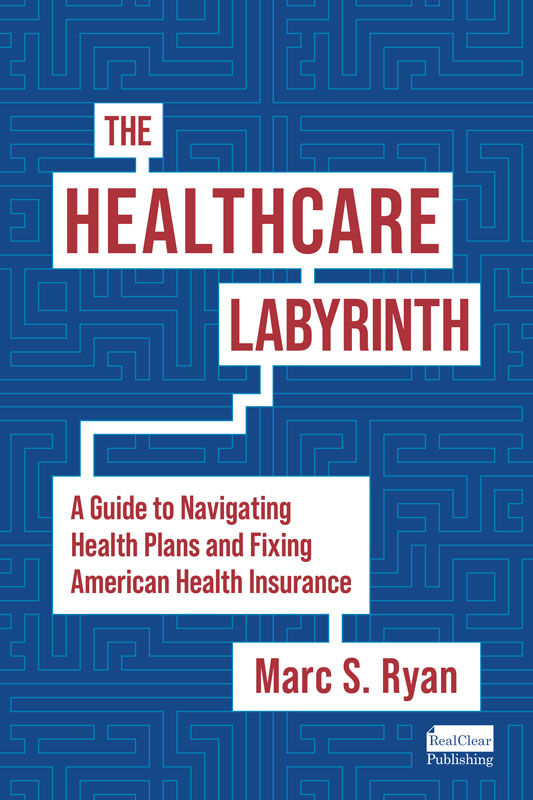
Affordability was central to this election. And healthcare was a major part of that affordability problem. Healthcare costs, insurance premiums, prescription drugs, and access to care are not abstract political talking points. They affect household budgets every month. As I have written repeatedly in The Healthcare Labyrinth, healthcare policy is economic policy. Neither party can afford to treat it as a secondary issue.
As a Republican, I certainly don’t enjoy seeing my party lose so decisively. But I also welcome this opportunity to bring some sanity back to the Republican Party. Losing elections should force a party to reconsider its priorities, its leadership, and whether it is actually addressing the problems Americans face. Suffice it to say that this old guard Republican has little in common with the MAGA base of the party today. I continue to believe that the party needs to return to its historic liberal (small “l”) roots, which includes collaborating with the other party in governing.
Despite the huge win by Democrats Tuesday, this lesson applies equally to Democrats. Winning a wave election does not mean voters have given you a permanent mandate. The same voters who rejected Republicans can turn on Democrats just as quickly if they fail to hear the people and deliver. And extreme political and policy positions do not usually amount to delivering for the people.
The real challenge for both parties is to earn the loyalty of the enormous number of unaligned voters in the middle. That means focusing on affordability, healthcare, energy, economic security, and the issues that matter in people’s daily lives.
What will divided government bring?
So, what does a divided Washington bring now that Democrats control Congress and Republicans retain the White House? Will we see meaningful bipartisan legislation, or will Washington descend into investigations, political warfare, and gridlock? Will Democrats use their new power responsibly? Will Republicans recognize that the election was a warning rather than simply a temporary setback?
There is a lot to unpack. I’ll take a closer look at what this election means for Washington, policymaking generally, and healthcare specifically in my next blog on Monday.
#midterms #elections2026 #congress #trump #healthcare #coverage
— Marc S. Ryan