hhsoig

A Modest Election-Year Proposal For Healthcare Reform

In a recent blog, I made the case that Election 2024 will come down to a handful of states and districts/counties deciding both  the presidency and control of the House of Representatives. In the Senate, almost every competitive race has an incumbent Democrat or open Democratic seat.  Everything would have to go right for them to maintain control of the Senate. I also stated that I think healthcare could be a bit of a sleeper issue even though it theoretically ranks low on the list of Americans’ priorities this year. I say theoretically because pocketbook issues do rank high and healthcare is a key component of that. More important, these swing states and areas tend to have independents and more moderate voters who will decide outcomes. They may indeed prioritize healthcare more than the rest of the nation. See my recent blog at this link for my election analysis and

Read More »

Election Update And The Potential Role of Healthcare Issues

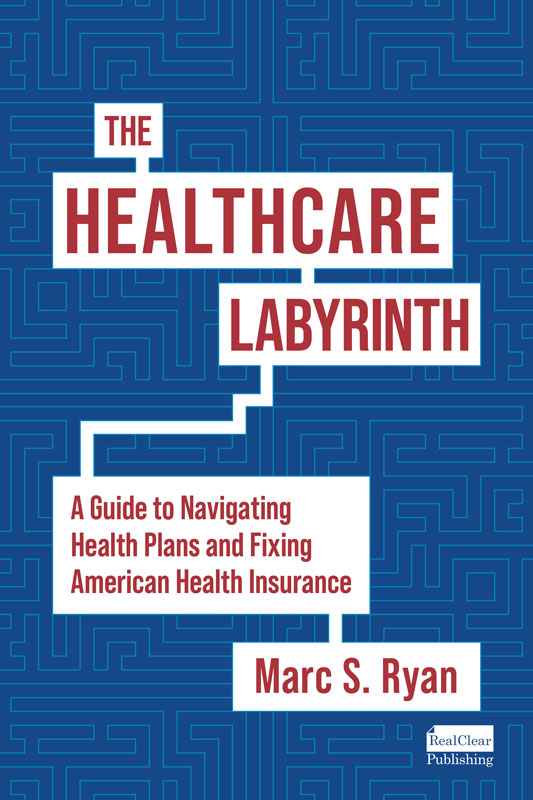
While healthcare has been displaced by other economic issues and immigration as the compelling Election 24 issues of the day, I have taken the position that healthcare could very well play a role in this year’s election outcome. How so? How close is it? Let’s take a look at how close things are for the presidency and the houses of Congress. For reliable forecasts on elections, I always go to at RealClear Politics. It is very reliable and unbiased.  I also like the fact it uses polling averages to determine the current prospects of various political contenders. In addition, I have a special connection as its publishing arm, RealClear Publishing, was one of the publishers of my book, The Healthcare Labyrinth (available via this site). I went to RealClear Politics for the presidential and Senate races and looked at a few other sources for the House races. Presidential race –

Read More »

What The Recent Report On The Medicare Trust Funds Tells Us About Healthcare Policy

Each year, the trustees of both the Social Security and Medicare Trust Funds issue reports about the fiscal health of the funds. The practice is meant to spark a public policy analysis within the executive and legislative branches, but it almost never does. This year is no different. The Biden administration touted the recent report on the extension of the solvency of the Medicare Part A Trust Fund as some sort of evidence that it has worked diligently to ensure Medicare’s future. In its election-year press release from Health and Human Services (HHS) Secretary Xavier Becerra, it touted supposed remarkable achievements on the Medicare stabilization front: “The Biden-Harris Administration has left no stone unturned in our efforts to strengthen and preserve Medicare, not just for our parents and grandparents but for our children and generations to come.” But nothing could be further from the truth. The administration and Democrats have

Read More »

More Disturbing Trends On Medicare Advantage Prior Authorization

In these pages I have bemoaned the fact that the Centers for Medicare and Medicaid Services (CMS) and Capitol Hill are taking the managed care out of Medicare Advantage (MA). MA’s value proposition is based on the plans’ ability to save dollars in furnishing traditional Medicare fee-for-service (FFS) benefits and passing on the savings in the form of reduced cost-sharing, filling in gaps in the traditional benefit, and adding additional benefits. But when CMS reins in the ability to save these dollars, it will have a direct impact on the benefits American seniors and people with disabilities see. What’s more, the antiquated FFS system is fraud-ridden and of poor quality. We need innovation not mimicking the old way of delivering care. But by hobbling MA plans’ innovation, CMS and Capitol Hill are setting MA and the overall healthcare system back. Driven by some strange need to ingratiate themselves to provider

Read More »

Available Now

$30.00